The old bridge puts you a little above clear water for 2.2 miles, which makes it one of the easiest places in the Keys to watch sea life without getting wet. According to the tourism council, the usual sightings from the deck are rays, turtles, dolphins and a wide mix of fish, with an occasional shark. Look up, too: pelicans, magnificent frigatebirds, gulls, cormorants and ospreys are regulars. Below is what lives here, where else to look, and the rules that protect the animals. Checked on Saturday, October 24, 2026.
- The tourism council says people on the bridge often see rays, sea turtles, dolphins and many kinds of fish, including sharks. Florida Keys and Key West: Walk the Old Seven Mile Bridge
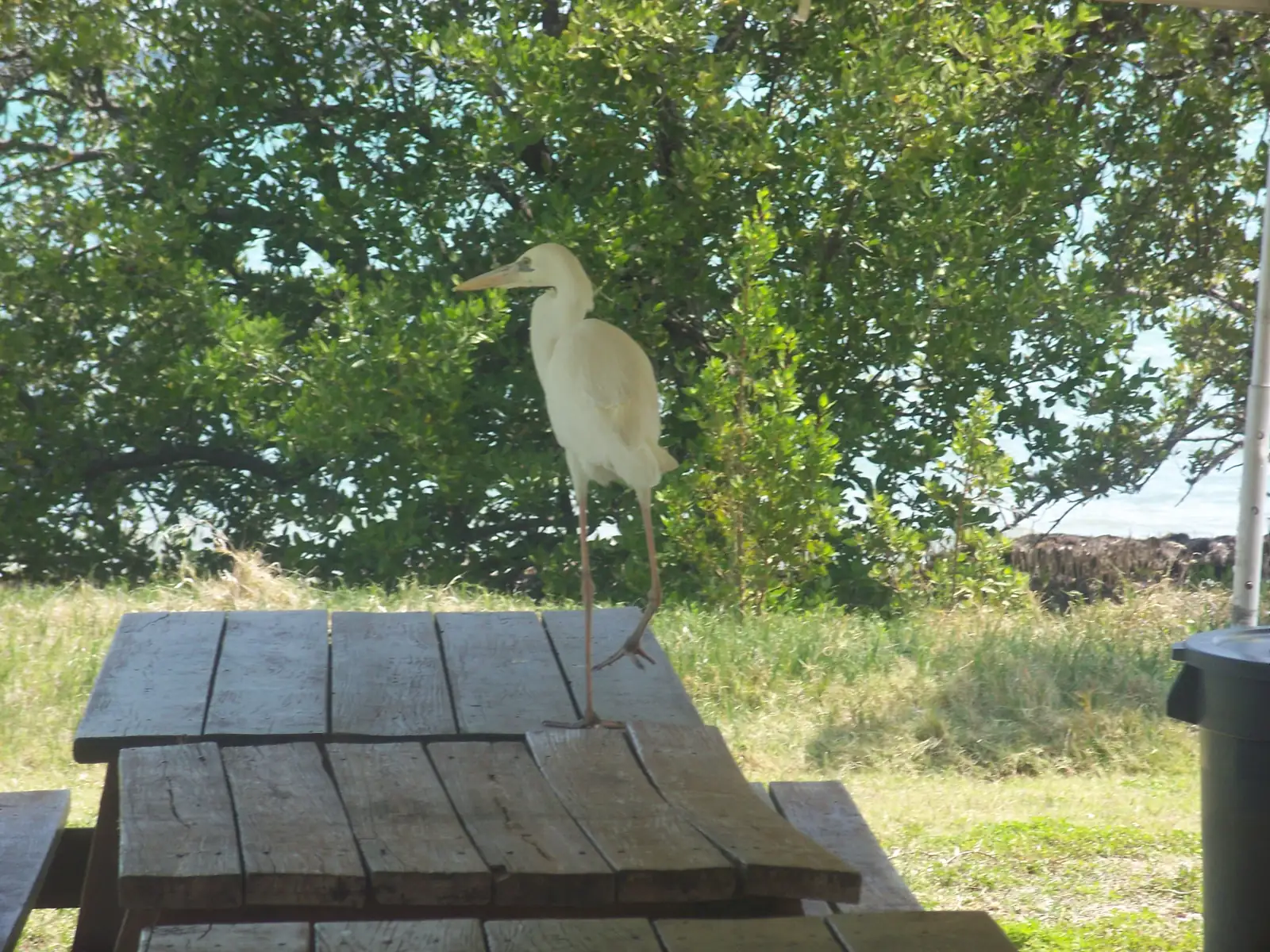
- Birds often seen from the bridge include pelicans, magnificent frigatebirds, gulls, cormorants and ospreys, according to the tourism council. Florida Keys and Key West: Walk the Old Seven Mile Bridge
The sanctuary under your feet
Everything you see in the water is inside the Florida Keys National Marine Sanctuary, which covers about 3,800 square miles. NOAA counts upward of 6,000 kinds of animals in it. It also contains the one coral barrier reef found anywhere in the lower 48 states, and NOAA calls its seagrass beds the biggest unbroken seagrass community on record north of the equator. Seagrass and the animals that feed in it are a big part of what keeps these waters so full of life.
- The Florida Keys National Marine Sanctuary covers about 3,800 square miles. NOAA Florida Keys National Marine Sanctuary: home page
- NOAA says more than 6,000 animal species live in the sanctuary, which holds the only coral barrier reef in the continental United States. NOAA Florida Keys National Marine Sanctuary: home page
- NOAA says the sanctuary has the largest documented continuous seagrass community in the Northern Hemisphere. NOAA Florida Keys National Marine Sanctuary: home page
Tips for spotting animals from the deck
Polarized sunglasses cut the glare off the water and let you see down into it. Calm mornings are easier than windy afternoons, because a choppy surface hides what is under it. Walk slowly and stop often; a ray resting on the bottom looks like a patch of sand until it moves. Binoculars help with birds on the channel markers and with dolphins farther out. Give yourself time, since the span is long and the animals keep their own schedule. The walk-time calculator helps you budget it.
Keep your hands and your snacks to yourself. Tossing food over the rail teaches wild animals to approach people, and for dolphins and manatees it is against the law. If you want a closer look, the island at the end of the span has the best setup for it, with guides who know what is in the water that day.
Sharks and fish at Pigeon Key
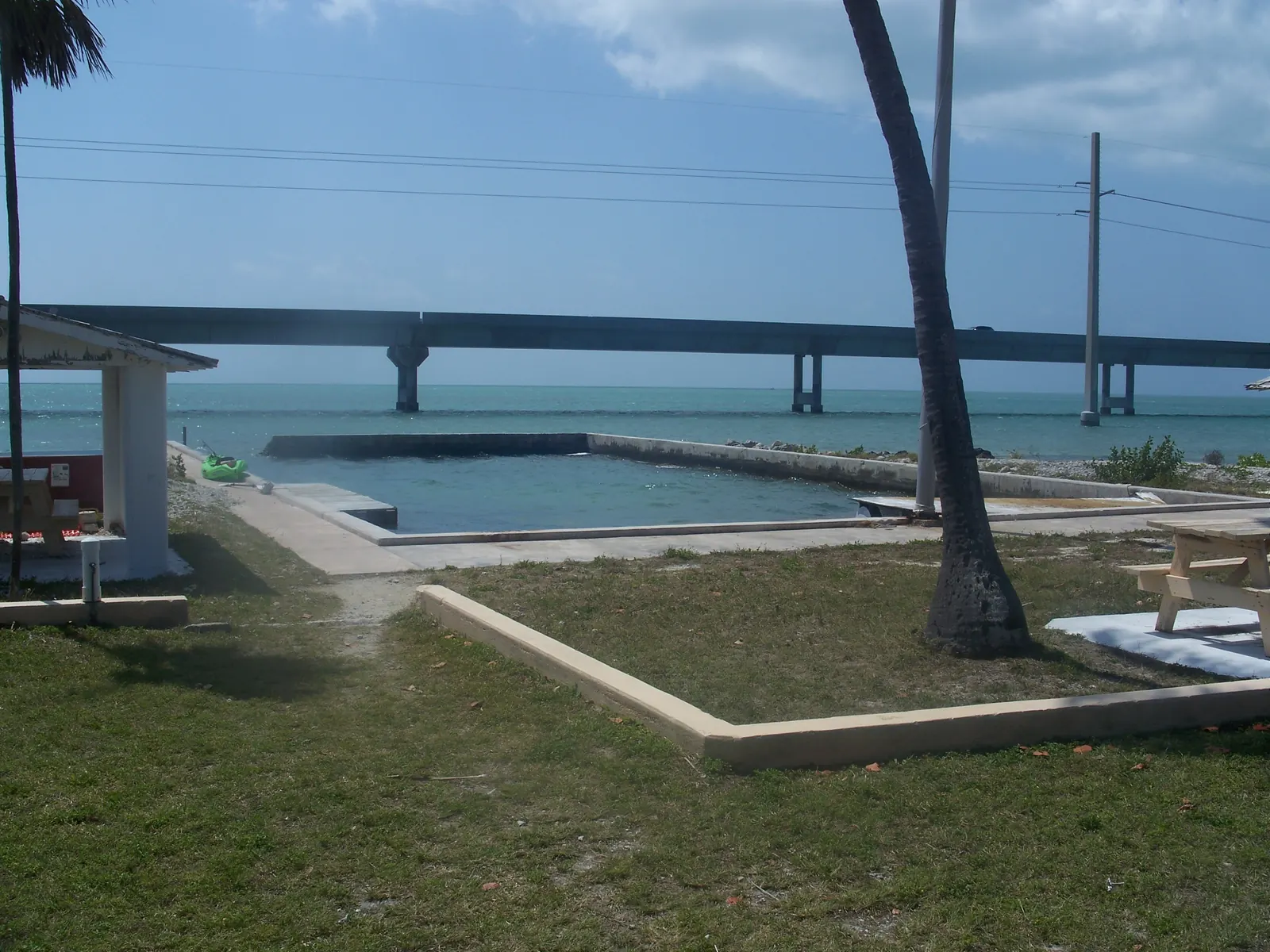
At the end of the span, Pigeon Key keeps a saltwater pool, dug in 1951, that now serves as an outdoor classroom. Swimming in it are nurse sharks, along with permit, snook, tarpon, grouper and plenty more, and the bottom has hermit crabs and sea cucumbers. Two train tours a day, the late-morning and early-afternoon trips, come with a shark feeding. Nobody may swim or fish in the pool. Snorkelers can try the open water by the dock and the beach, or where the pool meets the sea, with their own gear and a dive flag, but watch for fast tides and currents.
- The 11:30 a.m. and 1 p.m. train departures include shark feeding, according to Pigeon Key's tour page. Pigeon Key: Guided Tours
- Swimming and fishing are not allowed in the Pigeon Key saltwater pool. Pigeon Key: FAQ
- Pigeon Key says the best snorkeling is near the dock, off the beach and around the opening of the saltwater pool on the south side. Tides and currents can be swift. Pigeon Key: FAQ
- Snorkelers must bring their own gear and a dive flag. Pigeon Key does not rent equipment. Pigeon Key: FAQ
Birds over the water
The bridge puts you level with the birds that hunt over the channels, and the tourism council names pelicans, magnificent frigatebirds, gulls, cormorants and ospreys as the usual sightings. Pigeon Key suggests bringing binoculars for birding on the island, and in spring 2026 it reported Hooded Warblers, Peregrine Falcons and terns during migration. With island admission you can birdwatch on Pigeon Key itself.
- Pigeon Key suggests bringing snorkel gear, picnic supplies and binoculars for birding. Pigeon Key: Guided Tours
- Pigeon Key lists guided tours, picnics, snorkeling, fishing, birding, beach time, swimming and a self-guided route among things to do. Pigeon Key: FAQ
Dolphins: watch them, do not feed them
Wild dolphins sometimes pass under the bridge. Under the Marine Mammal Protection Act, feeding or harassing them is illegal. NOAA Fisheries warns that a violation can bring a fine as high as $100,000 and as much as a year behind bars. If you are in the water or in a boat, stay at least 50 yards away, about 150 feet, and do not swim with them. From the bridge, you are already at a good distance.
- NOAA Fisheries says it is illegal to feed or harass wild dolphins under the Marine Mammal Protection Act. Penalties can reach $100,000 and up to a year in jail. NOAA Fisheries: Protect Wild Dolphins, Admire Them from a Distance
- NOAA asks people to watch wild dolphins from at least 50 yards (150 feet) away and not to swim with them. NOAA Fisheries: Protect Wild Dolphins, Admire Them from a Distance
Manatees and sea turtles
Manatees have three layers of protection. Two are federal, the 1972 law on marine mammals and the 1973 law on endangered species, and the third is Florida’s own manatee sanctuary law from 1978. Feeding, harassing, chasing, hooking or disturbing them is illegal, even when they are resting. Putting out fresh water or food to lure one to your dock or boat is illegal too. State fines run up to $500 and 60 days in jail; federal penalties reach $100,000 and a year in prison.
- Manatees are protected by the federal Marine Mammal Protection Act of 1972, the Endangered Species Act of 1973 and the Florida Manatee Sanctuary Act of 1978. FWC: Living with Florida Manatees
- It is illegal to feed, harass, pursue, hook or disturb manatees, including resting manatees, and to give them water or food to draw them to a boat or dock. FWC: Living with Florida Manatees
- FWC says state manatee violations carry fines up to $500 and up to 60 days in jail, and federal violations up to $100,000 and up to a year in prison. FWC: Living with Florida Manatees
Sea turtles face their own threats. FWC’s list of the biggest dangers includes lost habitat, pollution, getting caught by accident in fishing gear, and collisions with boats. Discarded line and trash are part of that picture, so take yours home. Spot a turtle or manatee that is hurt, dead or being bothered? Report it to FWC’s Wildlife Alert line, 888-404-3922. From a mobile phone, *FWC or #FWC also works.
- FWC lists habitat loss, pollution, accidental capture in fisheries and boat strikes among the main threats to sea turtles. FWC: Sea Turtles
- To report an injured, dead or harassed manatee or sea turtle, call the FWC Wildlife Alert Hotline at 888-404-3922, or dial *FWC or #FWC from a cell phone. FWC: Sea Turtles
Sanctuary rules that apply to everyone
Across the sanctuary, taking or holding protected wildlife is banned. Skippers must not operate in a way that harms birds wading, resting or nesting, or that hurts marine mammals. Feeding fish or any sea creature from a boat or during a dive is off limits as well. Nor may anyone break, collect or keep coral or live rock, or throw trash overboard. Anglers have extra rules, covered on the fishing page.
- Sanctuary-wide rules ban taking or possessing protected wildlife, and boats may not be run in a way that injures wading, roosting or nesting birds or marine mammals. NOAA Florida Keys National Marine Sanctuary: Sanctuary Regulations
- Sanctuary rules ban feeding fish or other marine life from a vessel or while diving. NOAA Florida Keys National Marine Sanctuary: Sanctuary Regulations
- Removing, injuring or possessing coral or live rock is banned sanctuary-wide, and so is discharging trash. NOAA Florida Keys National Marine Sanctuary: Sanctuary Regulations
More wildlife on the other old bridges
At Bahia Honda, the state park says the view from its old bridge can include big rays and fish leaping clear of the water, and in still weather you may watch fish and turtles below. At Long Key State Park, the Golden Orb Trail runs 1.1 miles through several kinds of plant habitat and takes its name from a native spider. Both parks appear on our page on the other old bridges. For pictures of what you find, see photography and sunset.
- At Bahia Honda State Park a trail leads to the top of the old Bahia Honda Bridge, where a section of the old bridge gives a wide view of the island and water. Florida State Parks: History of Bahia Honda Bridge
- Bahia Honda State Park is open 8 a.m. until sundown, 365 days a year. Florida State Parks: Bahia Honda Hours and Fees
When to go
Wildlife does not keep a timetable, but your visit can. The island’s hours, 9 a.m. to 4 p.m., set the window for the pool, the shark feedings and the guided walk, so plan the bridge walk around them. Early in the day the light sits low and the wind is often lighter, which helps you see into the water. Late afternoon brings warm light for photos. Storm season, from June through November, can bring rough water and closures, so check the weather before you go.
- Pigeon Key's visitor page lists hours of 9 a.m. to 4 p.m., seven days a week, weather permitting. Pigeon Key: Visitors Center
- The Atlantic hurricane season runs June 1 to November 30, with a peak around September 10, according to the National Hurricane Center. NOAA National Hurricane Center: Tropical Cyclone Climatology
Where to watch wildlife
Pigeon Key saltwater pool
saltwater pool
Pigeon Key, Marathon, FL 33050
A 1951 saltwater pool, now used for teaching, that holds nurse sharks, permit, snook, tarpon, grouper and many other fish, plus hermit crabs and sea cucumbers. The 11:30 am and 1:00 pm train tours include a shark feeding. No swimming or fishing in the pool.
9:00 am to 4:00 pm, every day except major holidays
Source: Pigeon Key Foundation: Education with the Saltwater Pool; Pigeon Key Foundation: Guided Tours, checked 2026-10-24
Pigeon Key birding
birding spot
Pigeon Key, Marathon, FL 33050
In spring 2026 the Foundation reported Hooded Warblers, Peregrine Falcons and terns on and around the island during migration. Tour guests can birdwatch with binoculars.
9:00 am to 4:00 pm, every day except major holidays
Source: Pigeon Key Foundation: Bird Migration and the Florida Keys; Pigeon Key Foundation: Guided Tours, checked 2026-10-24
Old Bahia Honda Bridge overlook (marine life)
wildlife viewing
Bahia Honda State Park, 36850 Overseas Highway, Big Pine Key, FL 33043
From the top of the old bridge the state park says you may see large rays or jumping fish, and on calm days fish and sea turtles swimming below.
8:00 am to sundown, 365 days a year
Source: Florida State Parks: Bahia Honda State Park, Experiences and Amenities, checked 2026-10-24
Golden Orb Trail (Long Key State Park)
nature trail
67400 Overseas Highway, Long Key, FL 33001
A 1.1 mile walk through several plant communities, named after a native spider.
8:00 am to sunset, 365 days a year
Source: Florida State Parks: Long Key State Park, Experiences and Amenities, checked 2026-10-24
Seven Mile Bridge wildlife FAQ
Which train trips include shark feeding?
The 11:30 a.m. and 1 p.m. departures include shark feeding, according to Pigeon Key.
Source: Pigeon Key: Guided Tours
Can I snorkel at Pigeon Key?
Yes. The best spots are near the dock, off the beach and around the saltwater pool opening on the south side. Bring your own gear and a dive flag, and watch for swift currents.
Source: Pigeon Key: FAQ
Do sanctuary rules affect fishing near the bridge?
The bridge sits in the Florida Keys National Marine Sanctuary, where harvest follows FWC rules and some zones are no-take.
Source: NOAA Florida Keys National Marine Sanctuary: Sanctuary Regulations
What wildlife can I see from the bridge?
Rays, sea turtles, dolphins and many fish, including sharks, are often seen, according to the tourism council.
Source: Florida Keys and Key West: Walk the Old Seven Mile Bridge
What birds will I see from the old bridge?
Pelicans, magnificent frigatebirds, gulls, cormorants and ospreys. Pigeon Key suggests bringing binoculars.
Source: Florida Keys and Key West: Walk the Old Seven Mile Bridge
Can I feed the dolphins?
No. NOAA says feeding or harassing wild dolphins is illegal under the Marine Mammal Protection Act. Watch from at least 50 yards.
Source: NOAA Fisheries: Protect Wild Dolphins, Admire Them from a Distance
Are manatees protected?
Yes, by the Marine Mammal Protection Act, the Endangered Species Act and the Florida Manatee Sanctuary Act. Feeding, harassing or giving them water is illegal.
Who do I call about an injured sea turtle or manatee?
Call the FWC Wildlife Alert Hotline at 888-404-3922, or dial *FWC or #FWC from a cell phone.
Source: FWC: Sea Turtles
How big is the marine sanctuary around the bridge?
The Florida Keys National Marine Sanctuary covers about 3,800 square miles and holds more than 6,000 animal species.
Source: NOAA Florida Keys National Marine Sanctuary: home page
Dates, rules and hours can change. The organisers have the final word: Pigeon Key Foundation (official site)