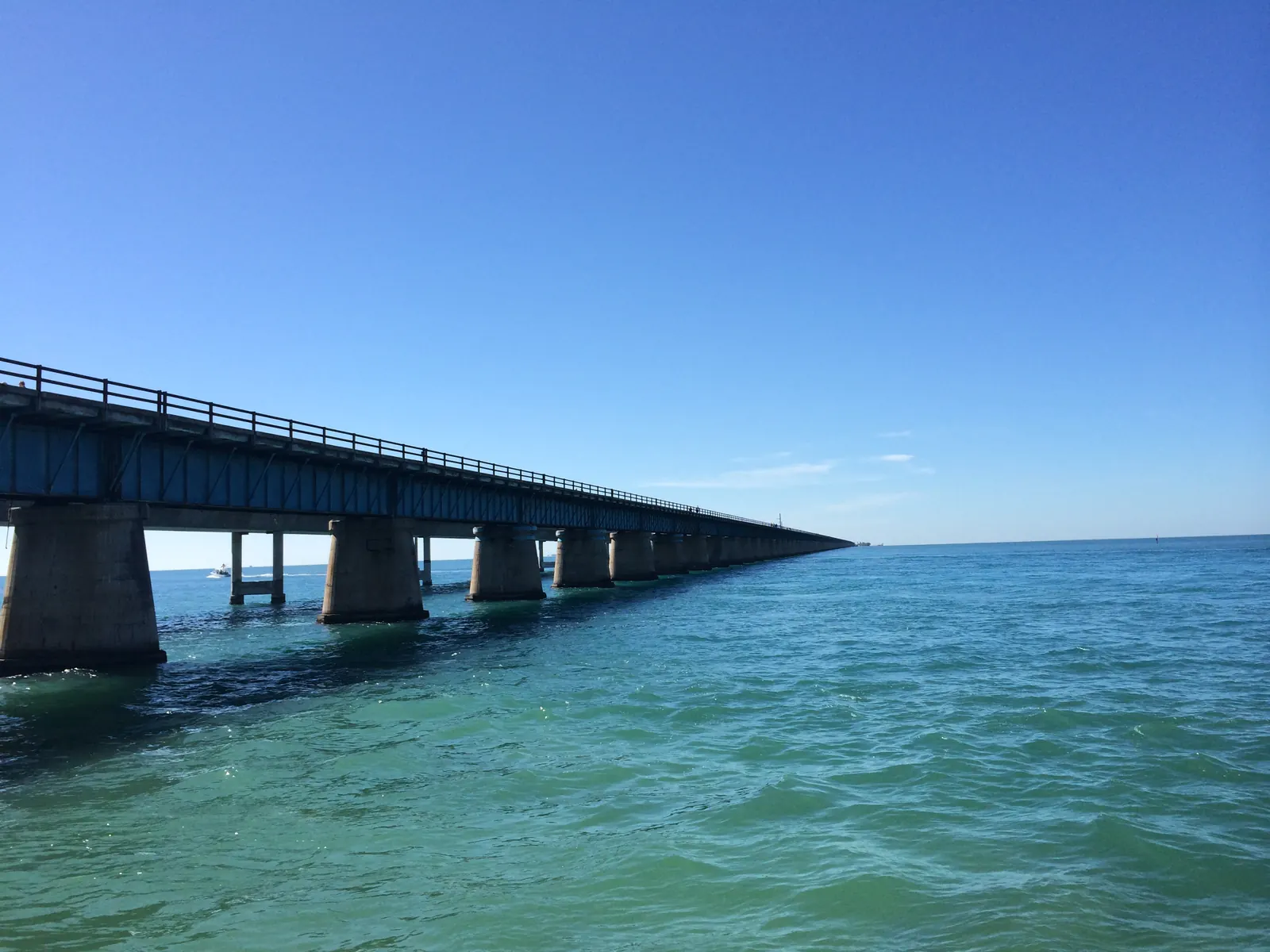
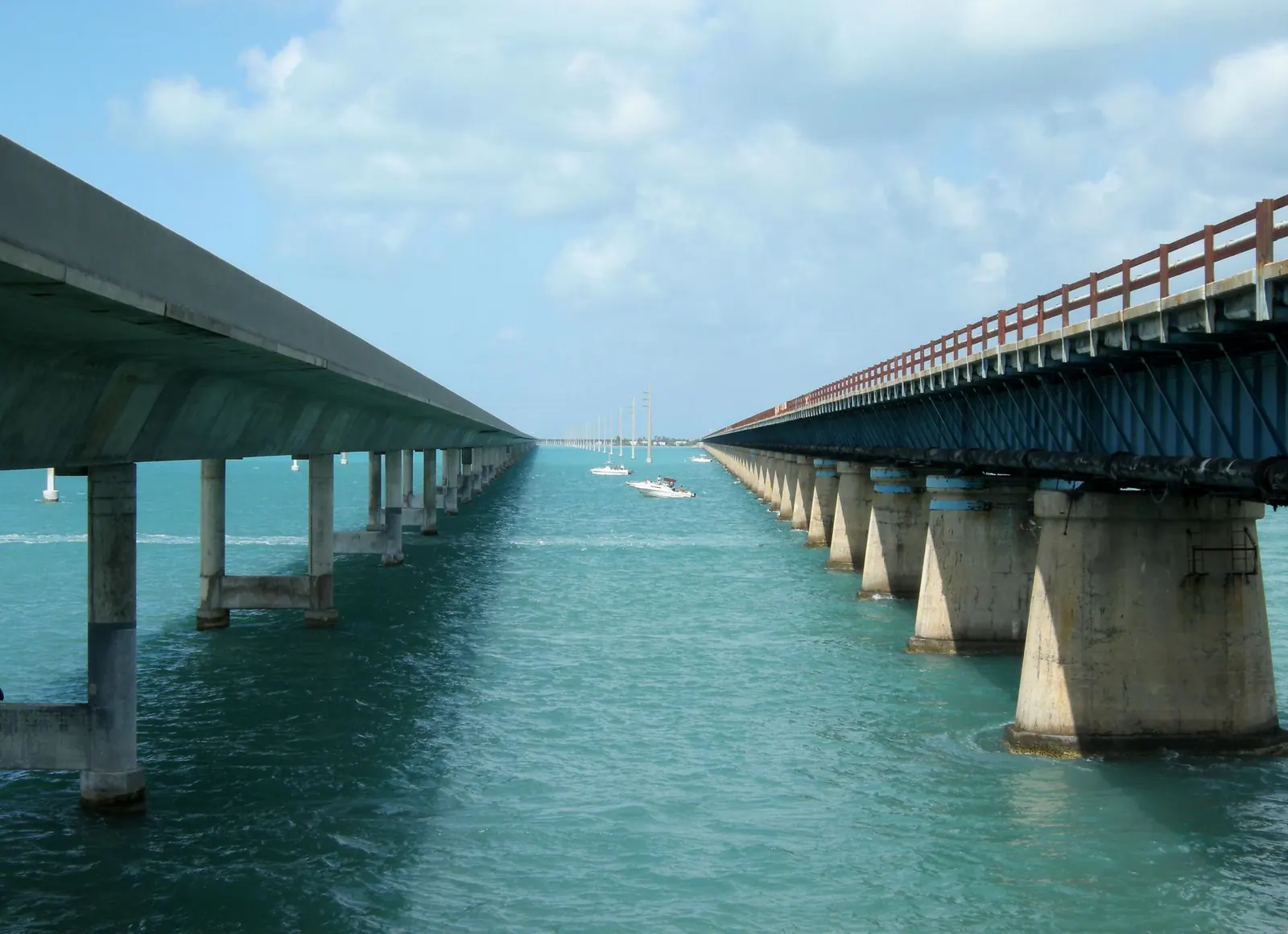
The short answer first: nobody official has settled it. When Pigeon Key announced the reopening in 2022, that notice told anglers to keep their lines off the bridge. Tourism council pages, on the other hand, list fishing among the things people do on the span. We found no current rule from Monroe County, the City of Marathon or FDOT. So we do not tell you it is allowed, and we do not tell you it is banned. If you see a sign at the trailhead, follow the sign. Checked on Saturday, October 24, 2026.
- Whether you may fish from the restored old bridge is not confirmed as of Oct 24, 2026. Pigeon Key's 2022 reopening post said fishing from the bridge was not allowed, while tourism council pages mention anglers. Fishing off the Pigeon Key dock is allowed, catch and release only. Pigeon Key: Old 7 Mile Bridge Reopens to Public (January 12, 2022)
Where you can fish with a clear rule
The Pigeon Key dock allows catch and release, with island admission. Several old bridges on the Overseas Heritage Trail have fishing platforms that Florida State Parks added for anglers. Both are covered below, along with license rules from the Florida Fish and Wildlife Conservation Commission (FWC).
Fishing at Pigeon Key
Pigeon Key allows fishing off its dock, catch and release only. The saltwater pool is off limits for both fishing and swimming. You need admission to go onto the island, even if you walk out, so the dock is a day-trip spot within the island’s 9 a.m. to 4 p.m. hours. Boaters can tie up at the same dock and pay on arrival. Our Pigeon Key page has the train times and prices.
- Visitors may fish off the Pigeon Key dock, catch and release only. Pigeon Key: FAQ
- Swimming and fishing are not allowed in the Pigeon Key saltwater pool. Pigeon Key: FAQ
- Admission is required to go onto Pigeon Key, join a tour or use the facilities, even if you walk or bike there. Pigeon Key: Visitors Center
- Boaters may tie up at the Pigeon Key dock at about 24.7046 N, 81.15535 W. Admission still applies. Pigeon Key: Visitors Center
Old bridges that were fitted for anglers
For fishing with a posted welcome, head to the Heritage Trail. The state park service says many of the trail’s railroad bridges are open to anglers, and it has bolted platforms onto several, Long Key, Tom’s Harbor and Channel Two among them. The trail uses 23 of Flagler’s historic bridges in all. On the Long Key Bridge, signs at both ends explain how anglers and trail users share the deck, and there are bins for old line. Channel Five is named in the state’s trail brochure as a popular spot. Some fishing bridges have been closed for safety at times, and we could not confirm the current list, so check before you load the car.
- Florida State Parks says fishing is allowed on many of the trail's old bridges, and fishing platforms have been added to bridges including Channel Two, Tom's Harbor and Long Key. Florida State Parks: Fishing on the Florida Keys Overseas Heritage Trail
- The Heritage Trail runs beside U.S. 1 and uses 23 of Flagler's historic railroad bridges, all listed on the National Register of Historic Places. Florida State Parks: Florida Keys Overseas Heritage Trail
- Florida State Parks has noted a Heritage Trail closure from mile marker 71 to 71.5 and some fishing bridges closed for safety. Current closures are not confirmed as of Oct 24, 2026. Florida State Parks: Florida Keys Overseas Heritage Trail
Bahia Honda State Park allows fishing in its designated areas only, and spearfishing and collecting tropical fish are prohibited there. The old bridges of the Keys page compares each bridge for walking, viewing and access.
Do you need a license?
Most likely, yes. Under state law you need a saltwater license to catch, or even attempt to catch, fish, crabs or other marine life, unless an exemption covers you. Visitors from out of state have three choices: $17 buys 3 days, $30 buys a week and $47 buys a full year, and a vendor may add a 50-cent fee. Florida residents pay $17 a year or $79 for five years, and a resident shoreline-only license is free.
- Florida requires a saltwater fishing license to take or try to take saltwater fish, crabs and other saltwater life, unless you are exempt. FWC: Saltwater Fishing Licenses
- FWC lists non-resident saltwater licenses at $17 for 3 days, $30 for 7 days and $47 for a year. Vendors may add a 50 cent fee. FWC: Saltwater Fishing Licenses
- A Florida resident annual saltwater license is $17, and a five-year license is $79. A resident shoreline-only license has no cost. FWC: Saltwater Fishing Licenses
That free shoreline license has limits. It works from land, or from a structure fixed to the land. It does not work from a boat, from a beach you got to by boat, or when you are in the water swimming or diving. FWC’s pages do not name the old bridge or Pigeon Key, so if you are unsure which license fits your spot, buy the general one.
- The shoreline license covers fishing from shore or a structure attached to shore. It does not cover fishing from a boat, from a shoreline you reached by boat, or while swimming or diving. FWC: Saltwater Fishing Licenses
Some anglers need no license at all. Anyone under 16 is exempt. Florida residents aged 65 and over need no license if they can show proof of age and residency or carry the optional Resident 65+ certificate. Two more exemptions: fishing from a pier whose owner holds a saltwater pier license, and riding as a customer on a licensed charter or party boat.
- Anglers under 16 do not need a Florida fishing license. FWC: Do I need a license or permit?
- Florida residents 65 or older are exempt if they carry proof of age and residency, or hold the optional Resident 65+ certificate. FWC: Do I need a license or permit?
- You do not need your own license when fishing from a pier that holds a saltwater pier license, or as a passenger on a licensed charter or party boat. FWC: Do I need a license or permit?
License-free fishing days
FWC sets aside four saltwater days a year when no license is needed. They are the opening weekend of June (both days), the first Saturday of September, and the Saturday that follows Thanksgiving. Seasons and bag and size limits still apply. On those days you can also skip the separate snook and lobster permits. The dates through the next year are listed here, worked out from FWC’s rule.
- FWC's license-free saltwater days are the first Saturday and Sunday in June, the first Saturday in September and the Saturday after Thanksgiving. Seasons, bag and size limits still apply. FWC: License-Free Fishing Days
- On license-free saltwater days, FWC says a snook or spiny lobster permit is not required either. FWC: License-Free Fishing Days
License-free saltwater fishing day
Organiser date for 2026FWC waives the saltwater fishing license for everyone on the Saturday after Thanksgiving. Seasons, bag and size limits still apply.
Saturday, November 28, 2026 (FWC rule: Saturday following Thanksgiving)
Add to calendar: Google Apple / Outlook (.ics)
Source: FWC: License-Free Fishing Days, checked 2026-10-24
License-free saltwater fishing weekend
Organiser date for 2027FWC waives the saltwater fishing license on the first Saturday and Sunday of June. Lobster and snook permits are also waived; all other rules apply.
June 5 and 6, 2027 (FWC rule: first consecutive Saturday and Sunday in June)
Add to calendar: Google Apple / Outlook (.ics)
Source: FWC: License-Free Fishing Days, checked 2026-10-24
Spiny lobster sport season
Organiser date for 2027Two-day recreational lobster season before the regular season opens August 6. Monroe County limit is 6 per person per day.
Wednesday and Thursday, July 28 and 29, 2027
Add to calendar: Google Apple / Outlook (.ics)
Source: FWC: Spiny Lobster recreational regulations, checked 2026-10-24
License-free saltwater fishing day
Organiser date for 2027FWC waives the saltwater fishing license on the first Saturday in September. Seasons, bag and size limits still apply.
Saturday, September 4, 2027 (FWC rule: first Saturday in September)
Add to calendar: Google Apple / Outlook (.ics)
Source: FWC: License-Free Fishing Days, checked 2026-10-24
Lobster and stone crab, briefly
Spiny lobster’s regular season runs from August 6 to March 31. The two-day sport season in 2027 falls on July 28 and 29. In Monroe County the limit is 6 lobsters per person per day in both seasons, and night diving is banned here during the sport season. The carapace must measure more than 3 inches, checked in the water, and you need a license and a lobster permit unless exempt. Lobster may not be taken at any time in the sanctuary’s no-take areas.
- Florida's spiny lobster regular season runs August 6 to March 31. FWC: Spiny Lobster recreational regulations
- FWC lists the 2027 two-day lobster sport season as July 28 and 29, 2027. It falls on the last Wednesday and Thursday of July each year. FWC: Spiny Lobster recreational regulations
- The lobster limit in Monroe County is 6 per person per day, in both the sport season and the regular season. FWC: Spiny Lobster recreational regulations
- Night diving is prohibited in Monroe County during the lobster sport season, and harvest is prohibited in John Pennekamp Coral Reef State Park during that season. FWC: Spiny Lobster recreational regulations
- A lobster's carapace must be larger than 3 inches, measured in the water. You need a saltwater license and a lobster permit unless exempt. FWC: Spiny Lobster recreational regulations
- Lobster harvest is banned year-round in no-take areas of the Florida Keys National Marine Sanctuary, among other places FWC lists. FWC: Spiny Lobster recreational regulations
Recreational stone crab season in state waters opens October 15 and closes May 2. Only claws may be kept, and each must reach 2 7/8 inches. The cap is 1 gallon per person or 2 gallons per boat, whichever is less. Anyone 16 or older using traps must first register them online for free, and the cap is 5 traps.
- Florida's recreational stone crab season in state waters runs October 15 to May 1 and closes May 2. FWC: Stone Crab recreational regulations
- Only stone crab claws may be taken, at least 2 7/8 inches long. The limit is 1 gallon of claws per person or 2 gallons per vessel, whichever is less. FWC: Stone Crab recreational regulations
- Recreational stone crabbers 16 and older must complete a free online trap registration before using traps, and may use up to 5 traps. FWC: Stone Crab recreational regulations
Sanctuary rules under the bridge
The water around the bridge is part of the Florida Keys National Marine Sanctuary. There, you may harvest marine life only as FWC rules allow. Feeding fish from a boat or while diving is banned. So is breaking off, harming or keeping any coral or live rock, and so is tossing trash into the water. The wildlife page covers what lives in the sanctuary.
- Inside the Florida Keys National Marine Sanctuary, harvesting marine life is allowed only as FWC rules permit. NOAA Florida Keys National Marine Sanctuary: Sanctuary Regulations
- Sanctuary rules ban feeding fish or other marine life from a vessel or while diving. NOAA Florida Keys National Marine Sanctuary: Sanctuary Regulations
- Removing, injuring or possessing coral or live rock is banned sanctuary-wide, and so is discharging trash. NOAA Florida Keys National Marine Sanctuary: Sanctuary Regulations
Line, hooks and protected animals
Manatees are protected by state and federal law, and hooking one is illegal along with feeding or harassing it. Pack out every scrap of line; the bins on the Long Key Bridge are there for a reason. If you hook or come across a hurt manatee or turtle, FWC wants to hear about it right away. Its Wildlife Alert number is 888-404-3922, and mobile users can also reach it with *FWC or #FWC.
- It is illegal to feed, harass, pursue, hook or disturb manatees, including resting manatees, and to give them water or food to draw them to a boat or dock. FWC: Living with Florida Manatees
- To report an injured, dead or harassed manatee or sea turtle, call the FWC Wildlife Alert Hotline at 888-404-3922, or dial *FWC or #FWC from a cell phone. FWC: Sea Turtles
Choosing a spot for your trip
If you are set on the Old Seven Mile Bridge itself, walk out without gear first and look for posted signs at the trailhead and along the span. If you want a sure thing, a Heritage Trail platform is the simpler choice, and the Pigeon Key dock pairs a few casts with the island tour. Wherever you fish, carry your license, a measuring device and a bag for used line. For timing your day and parking, see plan your visit and parking.
Fishing spots near the bridge
Pigeon Key dock
fishing dock
Pigeon Key, Marathon, FL 33050
Island visitors may fish from the dock, catch and release only. Fishing and swimming in the saltwater pool are not allowed. Boaters may tie up at the dock.
9:00 am to 4:00 pm, every day except major holidays
Source: Pigeon Key Foundation: FAQ, checked 2026-10-24
Long Key Bridge fishing platforms
fishing bridge
Florida Keys Overseas Heritage Trail between Long Key and Conch Key, Monroe County, FL
One of the old bridges where the state added cantilevered fishing platforms to the sides. Rules for sharing the bridge are posted at each end, with bins for used fishing line, and a Florida fishing license may be required.
8:00 am to sunset (Florida Keys Overseas Heritage Trail)
Source: Florida State Parks: Fishing on the Florida Keys Overseas Heritage Trail; Florida State Parks: Florida Keys Overseas Heritage Trail, checked 2026-10-24
Tom's Harbor Cut bridge fishing platform
fishing bridge
Florida Keys Overseas Heritage Trail at Tom's Harbor Cut, near Duck Key, Monroe County, FL
A historic bridge by Duck Key with a cantilevered fishing platform added by the trail. A Florida fishing license may be required.
8:00 am to sunset (Florida Keys Overseas Heritage Trail)
Source: Florida State Parks: Fishing on the Florida Keys Overseas Heritage Trail, checked 2026-10-24
Tom's Harbor Channel bridge fishing platform
fishing bridge
Florida Keys Overseas Heritage Trail at Tom's Harbor Channel, near Duck Key, Monroe County, FL
The second of the two Tom's Harbor historic bridges, also fitted with a cantilevered fishing platform. A Florida fishing license may be required.
8:00 am to sunset (Florida Keys Overseas Heritage Trail)
Source: Florida State Parks: Fishing on the Florida Keys Overseas Heritage Trail, checked 2026-10-24
Channel Five historic bridge
fishing bridge
Florida Keys Overseas Heritage Trail at Channel Five, Monroe County, FL
The state trail brochure names the historic Channel 5 bridge as a popular fishing spot, and the trail says its bridge and parking lot are open.
8:00 am to sunset (Florida Keys Overseas Heritage Trail)
Source: Florida State Parks: Florida Keys Overseas Heritage Trail; Florida State Parks: Florida Keys Overseas Heritage Trail brochure, checked 2026-10-24
Channel Two historic bridge fishing platform
fishing bridge
Florida Keys Overseas Heritage Trail at Channel Two, Monroe County, FL
A historic bridge with a cantilevered fishing platform, which the state trail brochure also names as a popular fishing spot. A Florida fishing license may be required.
8:00 am to sunset (Florida Keys Overseas Heritage Trail)
Source: Florida State Parks: Fishing on the Florida Keys Overseas Heritage Trail; Florida State Parks: trail brochure, checked 2026-10-24
Bahia Honda State Park fishing areas
state park fishing
36850 Overseas Highway, Big Pine Key, FL 33043
Fishing is allowed only in the park's designated areas, a Florida fishing license may be required, and catches must follow size, number, method and season rules. Spearfishing and collecting tropical fish are prohibited.
8:00 am to sundown, 365 days a year
Source: Florida State Parks: Bahia Honda State Park, Experiences and Amenities, checked 2026-10-24
Old Seven Mile Bridge fishing FAQ
Can I fish from the Old Seven Mile Bridge?
Not confirmed. Pigeon Key's 2022 reopening post said no fishing from the bridge, and no current posted rule was found. You can fish off the Pigeon Key dock, catch and release only.
Source: Pigeon Key: FAQ
Can I fish at Pigeon Key?
Yes, off the dock, catch and release only. Fishing is not allowed in the saltwater pool.
Source: Pigeon Key: FAQ
Do I need a fishing license in the Keys?
Yes, a Florida saltwater license is required unless you are exempt, such as anglers under 16 or Florida residents 65 and older with proof.
How much is a fishing license for visitors?
FWC lists non-resident saltwater licenses at $17 for 3 days, $30 for 7 days and $47 for a year.
Source: FWC: Saltwater Fishing Licenses
Is there a free fishing license for Florida residents fishing from shore?
Yes. The resident shoreline-only license has no cost. It does not cover fishing from a boat or a shore you reached by boat.
Source: FWC: Saltwater Fishing Licenses
Are there license-free fishing days?
Yes. Saltwater license-free days are the first weekend in June, the first Saturday in September and the Saturday after Thanksgiving. The next one is November 28, 2026.
Source: FWC: License-Free Fishing Days
When is lobster season in the Keys?
The regular season runs August 6 to March 31. The 2027 two-day sport season is July 28 and 29.
How many lobsters can I take in Monroe County?
Six per person per day, in both the sport season and the regular season. Carapaces must be over 3 inches.
Can I dive for lobster at night during mini-season?
Not in Monroe County. Night diving is prohibited there during the sport season.
When is stone crab season?
October 15 to May 1 in Florida state waters. Only claws at least 2 7/8 inches may be taken.
Do sanctuary rules affect fishing near the bridge?
The bridge sits in the Florida Keys National Marine Sanctuary, where harvest follows FWC rules and some zones are no-take.
Source: NOAA Florida Keys National Marine Sanctuary: Sanctuary Regulations
Who do I call about an injured sea turtle or manatee?
Call the FWC Wildlife Alert Hotline at 888-404-3922, or dial *FWC or #FWC from a cell phone.
Source: FWC: Sea Turtles
Can I fish from other old Keys bridges?
Yes. Florida State Parks says fishing is allowed on many Heritage Trail bridges, with fishing platforms at Channel Two, Tom's Harbor and Long Key.
Source: Florida State Parks: Fishing on the Florida Keys Overseas Heritage Trail
What was the Long Key Fishing Camp?
A railroad-era camp that drew famous anglers such as Zane Grey. The 1935 hurricane destroyed it and it never reopened.
Dates, rules and hours can change. The organisers have the final word: Pigeon Key Foundation (official site)